


For procurement managers working on construction, civil engineering, and infrastructure projects, the objective should be to procure products that comply with the project’s approved requirements, arrive on schedule, and are accompanied by traceable documentation. This guide explains the practical steps for achieving that objective.
1. Purchasing Steel Products for Contractors Starts with a Requirements List
Before requesting quotations, the technical office should prepare an item list based on the latest approved drawings and execution schedule. Terms such as “heavy box section” or “thick pipe” are not sufficient for an accurate purchase order because they do not define dimensions, material, or delivery requirements.
Include the following information in the purchase request:
- Product name, steel grade, and project-required standard
- Section dimensions, thickness, length, and required quantity or weight
- Intended application and requirements for coating, cutting, or preparation
- Required quality and inspection documentation
- Delivery time and location for each part of the order
When purchasing steel products for construction projects, match the order quantity with the cutting plan and usable workshop inventory. Waste should also be determined according to component geometry and the execution method; applying a fixed percentage to every item may result in unnecessary excess inventory.
2. Check the Specifications of Each Section According to Its Application
Two products with similar appearance or nominal size are not necessarily interchangeable for the same application. Purchasing should be based on the approved specifications, and any change in grade, thickness, or section type should be approved by the project’s technical manager.
| Product | Information Required When Ordering | Recommended Checks Upon Delivery |
| Rebar | Grade, diameter, length, and approved standard | Identification markings, documentation, dimensions, and visual condition |
| Steel Beams & Open Sections | Section type, size, grade, and length | Specification compliance, dimensions, straightness, and transportation damage |
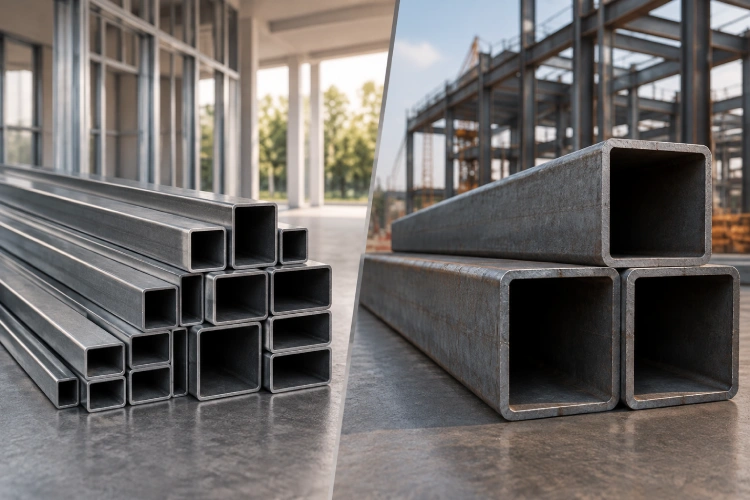
| Steel Hollow Sections & Profiles | Information Required When Ordering: Outer dimensions, thickness, grade, and application | Recommended Checks Upon Delivery: Thickness, dimensions, weld seam condition, and deformation |
| Steel Pipes | Information Required When Ordering: Outer diameter, thickness, manufacturing type, and service conditions | Recommended Checks Upon Delivery: Markings, dimensions, and required test certificates |
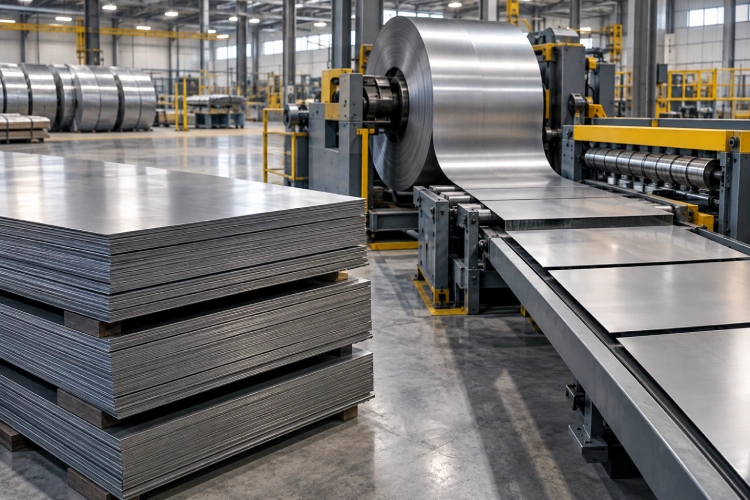
| Steel Sheets & Cut-to-Size Sheets | Information Required When Ordering: Grade, thickness, length, width, and cutting quality | Recommended Checks Upon Delivery: Dimensions, flatness, edges, and traceability |
For relevant options, review Keyhan Rolling’s Steel Hollow Section and Steel Pipe pages and match the available specifications with the project’s approved requirements.
In dam construction, bridge construction, and building services projects, the general product name alone is not sufficient for selection. Operating conditions and the requirements specified in the technical documents should be reflected in the purchase request.
3. Make Standards and Quality Documentation Traceable
One of the key steps in purchasing steel products for contractors is determining which documents should accompany the delivered shipment. The general statement “standard-compliant” does not provide enough information to verify whether the shipment conforms to the purchase order.
Depending on project requirements, documents such as the mill test certificate (MTC), manufacturer’s specifications, heat or production batch number, and inspection report may be requested. The information contained in these documents should be traceable to the shipment identification. The AISC guide also relates traceability to establishing a connection between a specific steel component and its corresponding mill test report.
Suitable weight and appearance alone do not prove all of a product’s technical characteristics. Dimensional checks, document verification, and the tests specified in the quality control plan serve different purposes. Specify the required tests and acceptance criteria before placing the order to prevent disputes upon delivery.
4. Compare the Total Cost When Purchasing Steel Products for Contractors
When purchasing steel products for construction projects, comparing two prices per kilogram without standardizing specifications and delivery conditions can be misleading. A lower-priced offer may ultimately involve additional costs for transportation, cutting, or supplying shortages in the order.
For an accurate comparison, record these components separately:
- Product cost with identical technical specifications
- Cutting, packaging, and loading costs
- Transportation and unloading costs at the project site
- Taxes and other costs listed in the pro forma invoice
- Potential storage and financing costs
Hypothetical Example: For a 100-ton order, a discount of 300 tomans per kilogram equals 30 million tomans. If the same offer includes an additional 40 million tomans in transportation costs, it would be 10 million tomans more expensive before considering other factors.
The settlement basis should also be clearly defined: actual weighbridge weight, theoretical weight, or number of sections. The quotation validity period and any costs excluded from the stated price should also be specified.
5. Evaluate Supply Capacity Before Payment
When purchasing steel products for contractors, the supplier should be able to provide clear information about stock availability, product origin, and delivery date. For critical items, consider reviewing sample documentation and the inspection plan before finalizing the order.
Useful questions to ask the supplier include:
- Is the product ready for shipment or does it need to be manufactured?
- Which factory or warehouse will the product be dispatched from?
- What documents will accompany each shipment?
- Can staged deliveries be coordinated with the project schedule?
- What is the procedure for handling shortages or discrepancies?
The pro forma invoice or purchase order should also specify the product details, quantity, delivery time, payment terms, and responsibility for transportation costs. Any substitution of the brand or product should be made only with the approval of the buyer and the relevant technical manager.

6. Coordinate Purchasing & Delivery with the Execution Schedule
Purchasing steel products for construction projects should be coordinated with the sequence of foundation, structural, building services, and finishing works. A large order does not necessarily need to be delivered to the workshop in a single shipment.
For each product group, determine the required date at the workshop, the time needed for incoming inspection, and the ordering lead time. Safety stock should also be determined based on the importance of the item, replenishment time, and available storage space.
For sheet-metal orders, reviewing cut-to-size steel sheets can be part of the decision regarding where cutting should be performed. Coordinate the cutting plan, required tolerances, component identification, and packaging method before placing the order.
7. Inspect the Shipment Before Use
The steel purchasing process for contractors does not end when the truck arrives at the project site. Assign a responsible person for incoming inspection and record the inspection results in the warehouse receiving documentation.
Recommended Delivery Inspection Checklist
- Match the waybill, purchase order, and shipment specifications.
- Record the number of packages, weight, and weighbridge information.
- Check dimensions and thickness according to the inspection plan.
- Inspect transportation damage, deformation, and surface condition.
- Match product identification with the required quality documentation.
- Record and photograph discrepancies before use or cutting.
Keep discrepant items separate from usable inventory until their status is determined. In the warehouse, maintain package identification and separate products according to type and specifications to prevent mix-ups when materials are issued to the execution team.
Frequently Asked Questions About Purchasing Steel Products for Contractors
No. Order quantity, item diversity, transportation distance, preparation time, and payment terms should be compared with warehouse or supplier offers. The decision criterion should be the total cost of supplying compliant products within the required timeframe.
Not by itself. Any weight difference should be evaluated together with the actual dimensions, length, product specifications, and permissible limits of the applicable standard. A weight table is a useful initial checking tool, but it does not replace a complete conformity assessment.
Send a list of required items including the product type, steel grade, dimensions, thickness, quantity, required documentation, unloading location, and delivery schedule. Providing this information makes it easier to receive accurate and comparable quotations.
Steel procurement for contractors and construction projects becomes easier to control when the technical requirements, total cost, delivery schedule, and acceptance criteria are clearly defined from the beginning.
To check the supply availability of relevant products from Keyhan Rolling, send your item list and project schedule through the Contact Us page and request details about the available specifications, documentation, and delivery conditions before placing the order.
Important Tips for Purchasing Steel Products for Contractors and Construction Projects